miércoles, 7 de noviembre de 2018

What does do a radiologist?

The radiologist is a doctor who specializes himself in the diagnosis and the treatment of diseases and injuries by means of the use of technologies of such medical images as the X-rays, the calculated tomography (TC), the nuclear magnetic resonance (RMN), the nuclear medicine, the tomography for emission of positrons (PET), the integration of images and the ultrasound. Due to the fact that some of these technologies of generation of images include the use of radiation, a suitable formation and knowledge of the safety practices and protection in the radiological area is important.
His radiologist has graduated of a faculty of accredited medicine, has approved an examination to obtain the license, and has completed a residence of at least four years of the medical only studies of posgrado in topics as:
  • Security radiologycal/protection 
  • Effects of the radiation in the human body
  •  Creation and suitable interpretation of medical and radiological examinations of quality. 
The majority of radiologists also have completed a scholarship of formation that consists in one or two additional years of training specialized in a certain subspeciality of the radiology obtaining image of the bosom, cardiovascular radiology or nuclear medicine.
 Resultado de imagen para radiologo

What is the digital mamography?

So much the digital mamografía like the conventional one they use radiation of X-rays to produce an image of the bosom; nevertheless, the conventional mamografía registers the image directly in a sheet, whereas in the digital mamografía, an electronic image of the bosom is stored as file of computer. It can improve, extend or manipulate to do a subsequent evaluation with more facility that the information stored in movie this digital information.

Since the digital mamografía allows that the radiologist should fit, guard and recover electronically the digital images, the digital mamografía can offer the following advantages that the conventional mamografía does not offer:
The medical professionals can share images filed electronically, which facilitates the consultations to long distance between radiologists and surgeons of the bosom.
  •  It is possible to notice with major facility subtle differences between the normal fabrics and the abnormal ones.
  •  The number of necessary procedures of follow-up can be a minor.
  •  Probably it is necessary to repeat fewer images, which reduces the time of exhibition to the radiation. 
The digital mamografías can do to him only in establishments certified for mamografías conventional and that they have received approval of the FDA to offer mamografías foxgloves. The procedure to become a mamografía by a digital system is the same that with a conventional mamografía.

radiologycal protection

The radiological protection is the discipline that studies the effects of the doses produced by the radiations ionizantes and the procedures to protect the alive beings of his harmful effects, being his principal aim the human beings.
 I seal in Frenchman: Zone contrôlée - Accès réglementé (controlled Zone - restricted Access) A " castle of lead " constructed to shield a radioactive sample in a laboratory. Radiological protection as for the decrees, procedure, recommendations to protect the occupationally exposed persons and the population in general from the adverse effects of the radiations ionizant.Resultado de imagen para proteccion radiologica

What is the scanning for Tomography computerized (TC)?

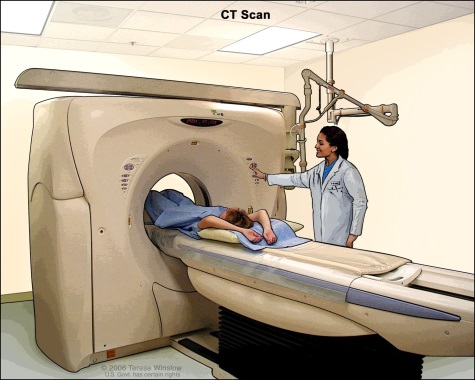
The term " tomography computarizada ", or TC, refers to a procedure computarizado of images for X-rays in that a narrow bundle of X-rays is projected to a patient and is turned rapidly about the body, producing indicate that they are processed by the computer of the machine to generate transverse images or "cut" - of the body. These cuts are called images tomográficas and contain information more detailed than the conventional X-rays. As soon as the computer of the machine gathers several successive cuts, "they" can "be "piled up" digitalmente to form a three-dimensional image of the patient who allows easier the identification and location of you them were structuring basic, as well as of possible tumors or abnormalities.
Este es un ejemplo de un paciente entrando al agujero de un escáner de TC

What is a panel flat detector?

A panel flat detector is a device that allows to realize a X-ray photography providing a digital radiological image to the instant. They are made of two topologías: in format "cassette" or integrated inside an equipment. In general, does one refer to this type of device under the initials DR for " digital radiology " 1? Unlike other systems that work only with " cassette escaneable in two steps " (plate of phosphorus fotoestimulable PSP) called CR " X-rays computarizada ".

 Those who work with "cassette" have a rectangular form with an active surface that goes from 5 x 5cm up to 60 x100cm with a thickness from 1 to 10 cm. The most common size used in human medicine is of 36 x 43 cm (14 x 17 inches).

According to the physical used beginning, these detectors divide in two principal groups:
  • Detectors of direct conversion: The X-rays turn directly into an electrical sign (technology CMOS)
  •  Detectors of indirect conversion: The X-rays turn into photons (technology of amorphous silicon or selenium) that in turn are turned into an electrical sign.
 The detectors are generally two-dimensional, but there are some versions in which a linear detector of an alone dimension moves to a constant speed along the whole active surface of the panel (as the typical scanner of computer), generating the second dimension.


Resultado de imagen para panel detector plano

Digital X-ray photography and Digital fluroscopy

 External Beam Radiotherapy can be considered to the digital radiology as the major technological advance in systems of images of medical use of last decade. In a few years the photographic movie for X-rays might fall down completely in disuse. An analogy appropriate and easy to deal is the substitution of the traditional cameras for the digital chambers. They can obtain, erase, to modify the images and it is possible to send them later to a network of computers.

The benefits that the digital radiology contributes are enormous. By means of this technology it is possible to come to do completely without the movies in the facilities or radiological departments. The doctor who prescribed the examination can see in his personal computer or in his portable one the image that it requested, and even issue a report a few minutes after the exploration having been realized. The images already do not guard in the only place, but several doctors placed to kilometres of distance can see them simultaneously. In addition, the patient can take the images of X-rays to him on a compact disk to put them at the disposal of other medical or other hospitals.
Resultado de imagen para radiologia digital

Interventional Radiology

The Interventional Radiology  is a subspeciality of the radiology in which technologies of image are in use for executing invasive procedures.

The aim of the interventional radiology  is to diagnose or to treat pathologies with a minimally invasive technology. Images are in use for directing the radiological procedures, which are usually executed by needles, guides and narrow pipes called catheters. Some of these procedures are realized for purely diagnostic processes (ej.:angiograma), whereas others are realized as part of specific treatments (ej.: angioplastia). The images provide a guide who allows the radiologist to direct these instruments across the body to the areas to treat. On having minimized the physical trauma of the patient the ratios of infection diminish, the time of recovery and shortens the hospitable stay Postoperatory.

 The Interventional Radiologist, using the diverse technologies of image (for example X-rays, Ultrasounds, Magnetic Resonance, Calculated Tomography, Ultrasound scans), it can treat a wide range of diseases guiding small instruments, as catheters and similar, across the blood glasses of the patient, only realizing tiny incisions in the skin. It offers this way an alternative to the surgical treatment of many conditions and such advantages as:

 *The risks, pain and time of recovery are normally very reduced in comparison to other procedures.

 * The majority of the treatments are ambulatory or only they need a very brief internment. Normally general anesthesia is not needed.

* The procedures, for all the enumerated advantages, can turn out to be more economic than the conventional surgery or other procedures.
Resultado de imagen para Radiología intervencionista

What does do a radiologist?

The radiologist is a doctor who specializes himself in the diagnosis and the treatment of diseases and injuries by means of the use of techn...